

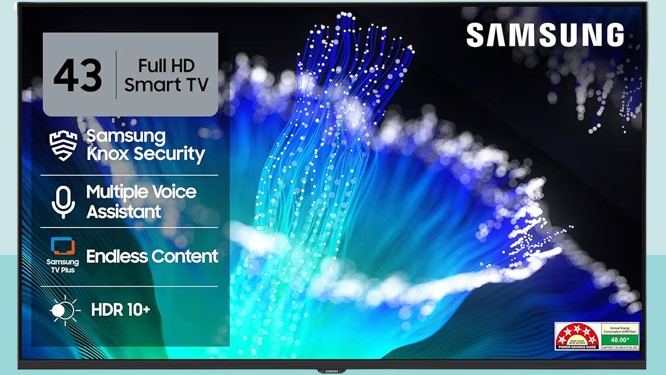
The Samsung 43-inch FHD Smart TV sits in an interesting position in 2025. It’s not the cheapest option available Xiaomi and TCL offer cheaper TVs at this size but it’s not trying to be. What Samsung is offering here is a known brand, reliable software, and a complete smart TV experience for a bedroom or medium-sized living room. Whether that’s worth the premium over budget alternatives depends on what you actually value.
The Display What Full HD Means in Practice
Full HD at 1920×1080 on a 43-inch screen looks sharp at normal viewing distances of 6 to 10 feet. The pixel density at this size is high enough that you won’t notice individual pixels during regular viewing. The complaint about Full HD versus 4K becomes more noticeable on larger screens at 55 inches and above 4K resolution starts mattering more. At 43 inches Full HD is genuinely adequate for most viewing situations.
HDR10+ is the notable display feature here. HDR improves the range between the brightest highlights and darkest shadows in supported content. Netflix, Prime Video, and Disney+ Hotstar have HDR10+ content. Samsung’s Micro Dimming Pro adjusts backlight zones to improve contrast further. This won’t match OLED or QLED performance but it meaningfully improves the experience over a basic LED panel without HDR.
The 178-degree viewing angle means the picture stays accurate from the sides useful for family viewing where not everyone sits directly in front.
The 50Hz refresh rate is adequate for streaming and regular TV watching. It won’t satisfy gaming use cases where 120Hz matters. For movies, sports, and streaming content it handles motion acceptably with Samsung’s processing helping smooth fast movement.
Tizen OS The Real Advantage Over Budget Brands
This is where Samsung earns the price premium over cheaper alternatives. Tizen is a mature, well-optimized smart TV operating system. The interface is responsive, apps load quickly, and Samsung updates it consistently.
Budget smart TVs running Android TV or lesser-known OS versions often slow down after 12 to 18 months of use as the processor struggles to keep up with app updates. Tizen on Samsung hardware tends to stay responsive longer because Samsung controls both the software and hardware optimization.
All major Indian streaming platforms are natively supported Netflix, Prime Video, YouTube, Disney+ Hotstar, SonyLiv, Zee5, JioCinema. The 8GB storage gives enough room for the streaming apps most people use without the storage-full warnings that plague cheaper TVs with 4GB or 2GB internal storage.
AirPlay support is a genuine differentiator iPhone users can mirror or cast content directly without any additional setup. Smart View handles Android mirroring. Both work reliably rather than being listed features that require workarounds.
Audio Honest Assessment
The 20W output is sufficient for a bedroom or apartment-sized living room at normal volumes. Dialogue clarity is good which is the baseline requirement for TV audio. The 3D Surround Sound processing creates a slightly wider audio impression than the physical speaker placement would suggest.
Q-Symphony is worth understanding correctly it allows compatible Samsung soundbars to work in harmony with the TV speakers rather than replacing them, producing better combined output. This is a future upgrade path rather than an immediate benefit. If you plan to add a soundbar later, Samsung compatibility is worth factoring in.
For users who find TV speaker audio inadequate, a budget soundbar improves the experience significantly regardless of TV brand. The Juke BAR 200A reviewed separately is an example of what ₹3,000 adds to a setup like this.
Connectivity Practical Check
Two HDMI ports is the main limitation to flag. If you have a cable box, a gaming console, and want to connect a soundbar that’s three HDMI devices for two ports. You’ll need an HDMI switch or prioritize which devices get permanent connections. Most TVs at this price have two ports so this isn’t unique to Samsung, but it’s worth planning around.
One USB port handles a flash drive for media playback. Wi-Fi, Bluetooth, and Ethernet all work as expected.
Price What You Should Actually Pay
The pricing on this TV varies by model variant and platform. The main model UA43F5550FUXXL is currently listed around ₹23,990 on Flipkart and at regional retailers. This is the standard market price and fair for what you’re getting.
The official Samsung website lists at around ₹26,700. There’s no reason to pay that when the same TV is consistently available for ₹3,000 less through authorized retailers on Flipkart.
Older Series 5 variants can be found at ₹19,900 at Reliance Digital. These are previous generation models with similar specifications but older software versions worth considering if price is the primary factor but verify the specific model before buying.
If your budget stretches past ₹25,000, it’s worth checking whether Samsung’s entry-level Crystal 4K models have dropped to ₹27,000 to ₹28,000 during sales. The step to 4K becomes meaningful on a 43-inch screen for users who watch a lot of native 4K content.
Model and Price Comparison
| Model | Price | Key Difference |
|---|---|---|
| Samsung UA43F5550FUXXL | Around ₹23,990 | Current main model Voice Remote, Q-Symphony |
| Samsung UA43T5450 (Legacy) | Around ₹22,499 | Older generation check software update support |
| Samsung Series 5 Baseline | From ₹19,900 | Basic variant verify specs before buying |
| Official Samsung Website (F5500) | Around ₹26,700 | No price advantage avoid unless necessary |
Samsung vs Xiaomi and TCL at This Size
Xiaomi and TCL offer 43-inch smart TVs for ₹18,000 to ₹22,000. The hardware specifications are often comparable on paper. The difference shows up in software longevity, interface responsiveness after 2 to 3 years, and service reliability.
If you’re buying a TV for a guest room or a secondary space where longevity and software quality matter less a Xiaomi or TCL saves meaningful money. If this is your primary family TV expected to last 5 or more years Samsung’s software track record and service network justify the premium.
Worth Buying?
For a primary bedroom or medium living room TV used mainly for streaming, OTT content, and everyday entertainment yes, at ₹23,990 the Samsung 43-inch FHD Smart TV is a solid and sensible purchase. The Tizen OS quality and Samsung’s update consistency give it longer useful life than most cheaper alternatives.
For users considering 4K at ₹23,990 you’re within ₹3,000 to ₹5,000 of Samsung’s entry 4K models during sales. If content consumption is heavy and you watch a lot of native 4K streaming, that stretch is worth making.
Samsung 43-Inch FHD Smart TV Full Specifications
| Category | Details |
|---|---|
| Brand | Samsung |
| Model | UA43F5550FUXXL |
| Screen Size | 43 Inches |
| Display | Full HD LED, 1920×1080, 50Hz |
| HDR | HDR10+ |
| Picture Tech | Micro Dimming Pro, FHD Picture Enhancement |
| Viewing Angle | 178 Degrees |
| OS | Samsung Tizen OS |
| Storage | 8GB |
| Audio | 20W, 3D Surround Sound, Object Tracking Sound Lite, Q-Symphony |
| HDMI Ports | 2 |
| USB Ports | 1 |
| Connectivity | Wi-Fi, Bluetooth, Ethernet, AirPlay, Smart View |
| Supported Apps | Netflix, Prime Video, YouTube, Disney+ Hotstar, SonyLiv, Zee5, JioCinema and more |
| Power Consumption | 85W (48 kWh annual) |
| Dimensions | 95.6 × 56.1 × 7.9 cm, 5.9 kg |
| VESA Mount | 200 × 200 mm |
| Colour | Black |
| Warranty | 1 Year Comprehensive + 1 Year Additional on Panel |
| Made In | India |
Questions about specific TV comparisons or whether this suits your room size drop them in the comments.
